
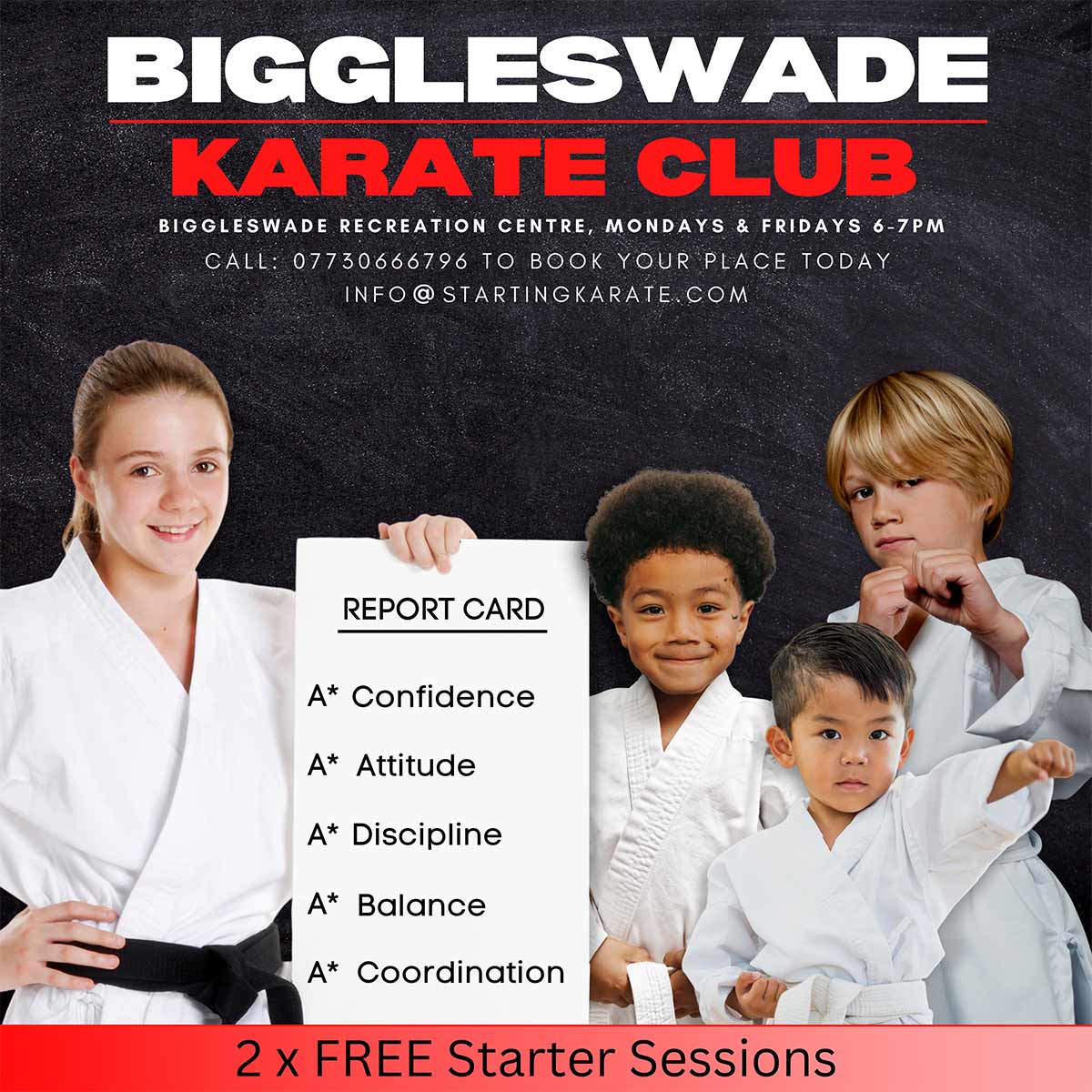
Discover the Transformative Power of Karate at Biggleswade Karate Club
In a world that constantly demands our attention and energy, finding an activity that not only improves physical fitness but also cultivates mental fortitude and inner peace can be a life-changing discovery.
For the residents of Biggleswade and the surrounding areas, this opportunity is right on their doorstep. Biggleswade Karate Club, a proud member of the Zanshin Karate Dojo family, is inviting you to embark on a journey of self-discovery and empowerment. And to make that first step even easier, the club is offering two free trial classes for new students, both children and adults.
This is your chance to experience firsthand the myriad benefits of traditional karate in a friendly, supportive, and highly professional environment.
The Enduring Appeal of Karate: More Than Just a Martial Art
Karate, a martial art with a rich history and a profound philosophy, is often misunderstood as being solely about fighting. While self-defence is certainly a key component, the true essence of karate lies in the pursuit of personal growth. The word “karate” itself translates to “empty hand,” signifying that the practitioner’s greatest weapon is not a physical object, but their own body and mind, honed through disciplined training.
The practice of karate is a holistic one, seamlessly blending physical exertion with mental discipline. On a physical level, it is a fantastic full-body workout.
The dynamic movements, including punches, kicks, blocks, and stances, improve cardiovascular health, increase strength and stamina, enhance flexibility and coordination, and develop lightning-fast reflexes. Unlike repetitive gym workouts, karate training is always varied and engaging, keeping both body and mind stimulated.
Mentally, karate offers a wealth of benefits that extend far beyond the dojo. The emphasis on focus and concentration required to learn and execute complex techniques sharpens the mind and improves attention span. The structured nature of the training, with its clear progression through the ranks, instils a powerful sense of discipline and perseverance. As students overcome challenges and master new skills, they develop a profound sense of self-confidence and self-esteem that permeates all aspects of their lives.
Empowering the Next Generation: The Benefits of Karate for Children
In today’s fast-paced, screen-dominated world, children face a unique set of challenges. Karate provides a powerful antidote, offering a positive and engaging outlet that fosters both physical and character development. At Biggleswade Karate Club, the junior classes are specifically designed to be fun, engaging, and educational, providing a safe and supportive environment for children to thrive.
Respect Through The Dojo Etiquette
One of the most significant benefits of karate for children is the development of discipline and respect. The dojo etiquette, which includes bowing to the instructors and fellow students, teaches children the importance of courtesy and respect for others. The structured nature of the classes helps them to understand the value of rules and to follow instructions, a skill that translates directly to improved behaviour at home and at school.
Karate for building confidence
Karate is also a fantastic tool for building confidence. As children learn and master new techniques, they gain a tangible sense of accomplishment that boosts their self-esteem. The supportive and encouraging atmosphere at Biggleswade Karate Club ensures that every child feels valued and celebrated for their efforts, regardless of their natural ability. This newfound confidence can help children to overcome shyness, to stand up to bullies, and to tackle new challenges with a positive attitude.
Karate improves focus and concentration
Furthermore, karate improves focus and concentration. The need to pay close attention to the instructor and to remember complex sequences of movements helps to sharpen a child’s mental acuity. This enhanced focus can have a direct impact on their academic performance, helping them to concentrate better in the classroom and to absorb new information more effectively.
The Transformative Power of Karate for Adults
It’s a common misconception that martial arts are only for the young and athletic. In reality, karate is a highly accessible and rewarding activity for adults of all ages and fitness levels. Whether you’re looking to get in shape, to relieve stress, to learn a practical skill, or simply to try something new, Biggleswade Karate Club offers a welcoming and inclusive environment for you to begin your journey.
Karate For Health
For many adults, the fitness benefits are the initial draw. Karate provides a comprehensive workout that improves cardiovascular health, builds lean muscle, and increases flexibility. The varied and dynamic nature of the training keeps things interesting, making it far more engaging than a monotonous gym routine. And because you’re learning a valuable skill at the same time, the sense of accomplishment is far greater.
Karate To Combat Stress
In our high-pressure society, stress has become an all-too-common ailment. Karate offers a powerful and effective way to combat stress and to improve mental well-being. The intense physical activity provides a healthy outlet for pent-up tension and frustration, while the focus on breathing and mindfulness helps to calm the mind and to promote a sense of inner peace. Leaving the dojo after a challenging training session, you’ll feel not only physically tired but also mentally refreshed and rejuvenated.
Karate For Self Defence
Of course, the self-defence aspect of karate is a major draw for many adults. In an uncertain world, the ability to protect yourself and your loved ones provides a profound sense of security and confidence. At Biggleswade Karate Club, you will learn practical and effective self-defence techniques in a safe and controlled environment. But more than just the physical techniques, you will also develop the situational awareness and the confidence to avoid dangerous situations in the first place.
What to Expect at Biggleswade Karate Club
Taking the first step into a karate dojo can be daunting, but at Biggleswade Karate Club, you’ll be met with a warm welcome and a friendly, supportive atmosphere. The club prides itself on its inclusive and non-judgmental environment, where students of all ages and abilities are encouraged to train together and to support one another.
Your First Classes
Your first few classes will focus on the fundamentals. You’ll be introduced to the basic stances, blocks, punches, and kicks, as well as the dojo etiquette and a few of the Japanese terms used in the class. The instructors are patient, experienced, and dedicated to helping you learn at your own pace. They will break down the techniques into easy-to-understand steps, providing individual feedback and encouragement along the way.
No Special Equipment Needed
You don’t need any special equipment to get started. Just wear loose, comfortable clothing that you can move in easily, such as a t-shirt and jogging bottoms. And don’t forget to bring a bottle of water to stay hydrated.
Your Two Free Classes Await
Biggleswade Karate Club is so confident that you’ll love the experience that they’re offering two free trial classes to all new students. This is the perfect opportunity to see for yourself what the club is all about, to meet the instructors and fellow students, and to experience the many benefits of karate without any financial commitment.
To claim your two free classes, simply visit the Biggleswade Karate Club page on the Zanshin Karate Dojo website at zanshinkaratedojo.co.uk/biggleswade-karate-club. There you will find all the information you need, including class times and contact details.
Conclusion
Whether you’re a parent looking for a positive and empowering activity for your child, or an adult seeking a new challenge and a path to improved fitness and well-being, Biggleswade Karate Club has something to offer you. With its welcoming atmosphere, expert instruction, and the incredible offer of two free trial classes, there has never been a better time to begin your karate journey. Take the first step today, and discover the strength, confidence, and inner peace that you never knew you had.
Starting Karate FAQ
Frequently Asked Questions
Absolutely not. This is one of the most common myths. You don't get fit to start karate; you start karate to get fit. A good dojo (training hall) will welcome people of all fitness levels. The training is progressive, meaning you start with the basics and gradually build your strength, stamina, and flexibility at a pace that is right for you. Your journey starts from your current level, not from where you think you should be.
For your first few trial classes, there's no need for a special uniform. Simply wear loose, comfortable clothing that you can move in easily, such as a t-shirt with jogging bottoms or leggings. Training is done in bare feet on the dojo floor, so no special footwear is required. Just bring a bottle of water and a willingness to learn.
You are never too old to start your martial arts journey. Many people begin training in their 30s, 40s, 50s, and even older, and they find it to be incredibly beneficial. Karate is an activity that can be adapted to your body's capabilities and is a fantastic way to improve mobility, balance, strength, and cognitive function as you age.
Karate is exceptionally beneficial for children. It provides a structured, active, and fun environment where they learn far more than just self-defence. The core lessons of karate for kids include:
Discipline and Focus: Following instructions and concentrating on techniques.
Respect: Bowing to the Sensei (instructor) and fellow students.
Confidence: Gaining self-esteem through achievement.
Coordination and Balance: Developing body awareness and motor skills.
Most clubs accept children from the age of 5 or 6, as this is typically when they have developed the necessary attention span to benefit from a structured class.
While every class is slightly different, most follow a similar structure:
Warm-up: Gentle exercises and stretching to prepare the body for training.
Kihon (Basics): Practising the fundamental techniques of karate, such as punches (tsuki), kicks (geri), blocks (uke), and stances (dachi).
Kata (Forms): Performing a pre-arranged sequence of movements against one or more imaginary opponents. This builds muscle memory, focus, and power.
Kumite (Sparring): Controlled partner drills to practice timing, distance, and control. This is always introduced gradually and safely.
Cool-down: Final stretches to improve flexibility and aid recovery.
The safety of students is the number one priority in any reputable karate club. Training is carefully structured to minimise risk. Any partner work or sparring is introduced progressively and is typically non-contact or light-contact, with a strong emphasis on control. While minor bumps or muscle strains can occasionally happen as in any physical activity, serious injuries are very rare.
It really does differ, from person to person. The journey to earning a black belt (Shodan) has to be thorough. It represents a high level of technical competence and, more importantly, a deep commitment to personal growth. With consistent training (attending class twice a week), the average time it takes is between 3 and 5 years. However, it's vital to remember that the black belt is not the final destination; it's the beginning of a new, deeper phase of learning.
No. You won't be expected to buy a karate uniform (called a 'gi'(pronounced gee)) until after you have completed your trial period and officially joined the club. Your Sensei will then be able to advise you on the best place to buy one. Other protective equipment for sparring is typically not needed until you reach an intermediate level.
Many martial arts share similar philosophies but differ in their technical focus.
Karate: A Japanese art focusing primarily on striking techniques (punches, kicks, elbow and knee strikes). With kata being an integral and large part of the karate practice.
Judo: A Japanese grappling art centred on throws, holds, and pins.
Taekwondo: A Korean martial art renowned for its dynamic and acrobatic kicking techniques.
Kung Fu: A broad term for hundreds of styles of Chinese martial arts.
Sparring (kumite) is an important part of learning how to apply your techniques, but it is introduced very carefully. Beginners start with pre-arranged drills with a partner to learn the basics of timing and distance in a safe way. As you gain skill and confidence, you may progress to light, controlled free-sparring. The goal is always learning and mutual development, not aggression or winning a fight.
Yes, absolutely! In fact, these are excellent reasons to start karate. Flexibility and coordination are not prerequisites; they are skills that you will develop and improve directly through your training. The warm-ups, drills, and kata are all designed to enhance these abilities over time.
Look for a club with experienced, qualified instructors who foster a welcoming and encouraging atmosphere. A great sign is a club that offers free trial classes. This allows you to experience the teaching style, meet the people, and see if the dojo is a good fit for you before making any commitment. Stay away from Karate clubs that ask for money up front.